Why Dorset Remains One of the UK’s Most Desirable Property Locations
People who move to Dorset rarely describe it as dramatic or flashy. What they usually talk about instead is how settled life feels once they arrive. The pace changes slightly, the roads become less frantic, and even the busiest towns seem to hold onto a sense of space that’s become harder to find across much of southern England. That feeling alone explains why the county continues to attract serious interest from buyers, especially those leaving London and the South East. Many people browsing through the local estate agents in the Dorset market quickly realise the appeal is not based on one standout feature. It’s the combination of coastline, market towns, schools, and everyday liveability that keeps demand steady year after year.
And what makes Dorset different from some other popular counties is that it hasn’t completely reshaped itself around outside investment. You still get places that feel lived in rather than curated for weekend visitors. That authenticity, slightly scruffy in places but generally charming, matters more than people realise once buyers begin comparing locations seriously.
A County That Offers Variety Without Feeling Disconnected
One reason Dorset holds its value so well is the sheer range of lifestyles available within a relatively compact area. Bournemouth attracts younger professionals and remote workers who still want rail access into London, while towns like Wimborne and Sherborne appeal to families looking for stronger schools and quieter surroundings. Further west, Bridport and Lyme Regis carry a different mood entirely, shaped more by independent businesses and coastal living than commuter culture.
Because the county isn’t dominated by a single economic centre, buyers tend to spread across different areas depending on what stage of life they’re in. That creates a healthier market overall. In most cases, locations driven entirely by one industry or demographic can become volatile once conditions change. Dorset has avoided that pattern for the most part, partly because demand comes from several directions at once.
There’s also a practical side to the appeal that often gets overlooked. Road links into Hampshire and Somerset are reasonably straightforward, Southampton Airport remains accessible from eastern Dorset, and direct rail services from Bournemouth to London Waterloo still make hybrid working realistic. Buyers who once assumed rural living meant sacrificing convenience often rethink that after spending a few weekends in the area.
Coastal Living Still Carries Weight With Buyers
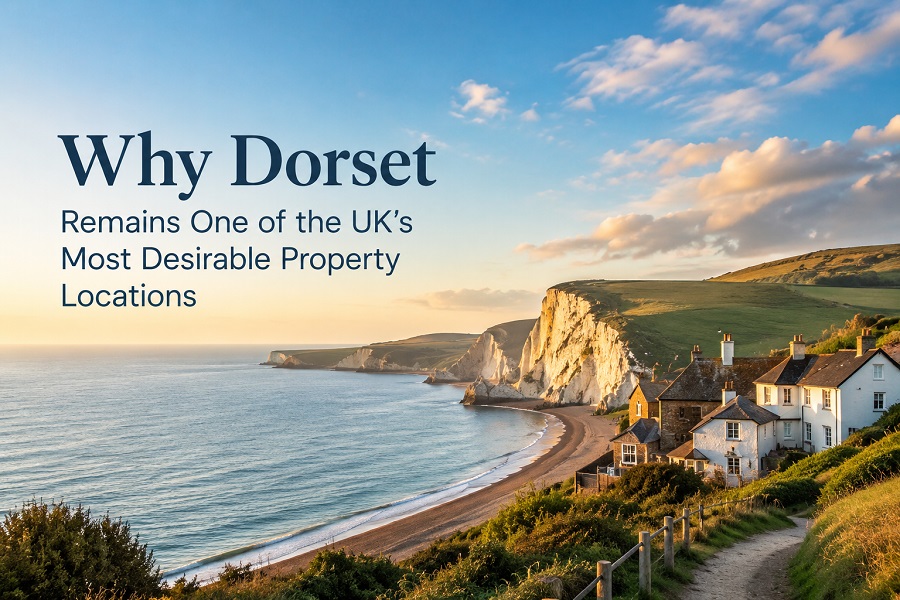
The coastline obviously plays a major role, but not always in the glossy way property brochures suggest. Dorset’s beaches and harbours are part of daily life for residents rather than occasional attractions. In Poole, early morning walks around the harbour are routine for locals. In Weymouth, the seafront still feels tied to the town itself rather than existing purely for tourism.
That distinction matters because buyers have become more cautious about heavily seasonal locations. A town that empties out half the year can feel isolating once the novelty wears off. Dorset generally avoids that problem. Even places with strong visitor economies tend to retain functioning high streets, local services, and year round communities.
And honestly, people are willing to pay for that consistency. Coastal property elsewhere along the south coast often feels overdeveloped or overly polished, whereas Dorset still has stretches that feel comparatively untouched. The Jurassic Coast, protected by its UNESCO status, limits the kind of aggressive development seen in some neighbouring regions. So although prices remain high in many parts of the county, buyers usually feel they’re paying for something that’s unlikely to disappear under future expansion.
Schools, Community Life, and the Pull for Families
Families moving into Dorset often mention schools early in the process, but the decision usually runs deeper than exam results alone. Areas such as Dorchester, Broadstone, and Ferndown attract attention partly because they offer a steadier day-to-day environment. Parents tend to value the quieter roads, access to green space, and a smaller community feel alongside education itself.
The county also benefits from having towns that remain functional rather than purely aspirational. You can still find local butchers, independent cafés, sports clubs, and high streets that haven’t entirely given way to chains. That may sound like nostalgia talk, but there’s real economic value in places where people continue spending time locally. It hints at stability, and buyers notice it even if they don’t immediately describe it that way.
What’s interesting is how many younger families now arrive after initially moving elsewhere along the south coast. Places like Brighton and parts of Surrey once attracted the same demographic more heavily, yet rising costs and congestion have pushed some buyers further west. Dorset, comparatively speaking, still offers a fair amount of breathing room without complete isolation.
The Market Has Stayed Resilient Despite Wider Uncertainty
Over the past few years, property markets across England have become harder to predict. Higher mortgage rates changed buyer behaviour quickly, and some regions saw momentum fall away almost overnight. Dorset slowed too, naturally enough, but it didn’t experience the same sharp swings seen in heavily investor driven markets.
Part of that resilience comes down to the type of buyer the county attracts. Many purchases involve long-term plans rather than speculative investments. Retirees relocating permanently, families seeking schools, and professionals changing lifestyle priorities tend to hold property longer. That creates a steadier foundation beneath the market even during uncertain periods.
There’s also the issue of supply. Dorset cannot endlessly expand outward because large parts of the county remain protected countryside or coastline. While that occasionally frustrates local buyers trying to enter the market, it does help preserve value over time. Scarcity alone doesn’t guarantee strong prices, but limited development combined with sustained demand usually points in one direction.
So why do buyers continue prioritising Dorset despite national affordability pressures? In many cases, it’s because the county still offers something tangible that wealthier parts of southern England have gradually lost. Space feels usable rather than decorative. Town centres remain recognisable. And the natural environment still shapes everyday life instead of sitting behind endless new build estates.
Final Thoughts
Dorset’s appeal has never depended on trends alone, which is probably why it continues holding attention while other hotspots rise and fall in popularity. The county changes slowly, sometimes frustratingly so, yet that gradual pace is exactly what reassures buyers making long term decisions. People aren’t only purchasing homes here. They’re buying into a version of southern England that still feels relatively grounded.
That may become even more valuable over the next decade. As remote and hybrid working continue reshaping where people choose to live, counties that combine accessibility with genuine quality of life are likely to remain in demand. Dorset already fits that description naturally, without needing to reinvent itself to attract attention.