Clapham Neighbourhoods Ranked: Common, Old Town, and North—Where Are Prices Heading?
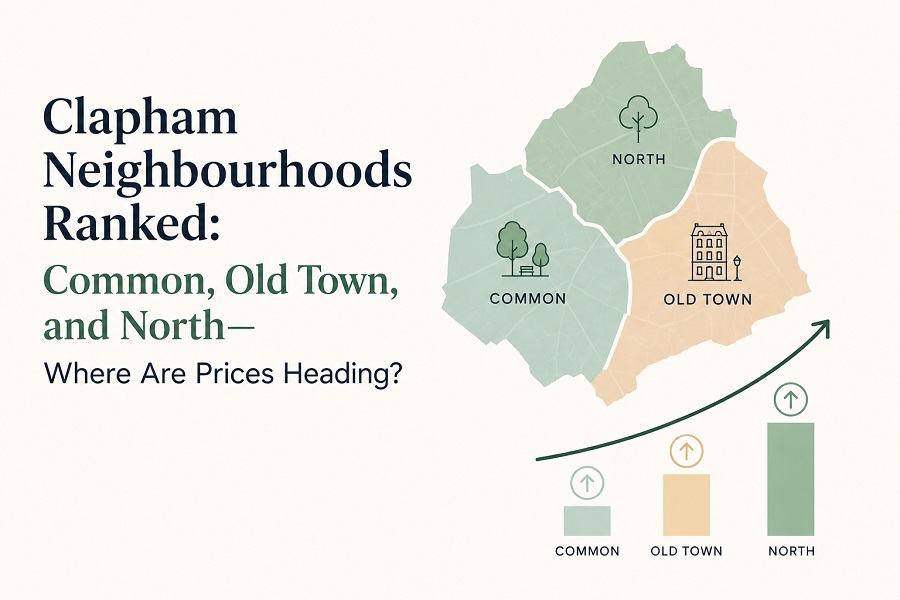
Right, so Clapham’s actually three quite different neighbourhoods, depending on what you want and what you can spend. The thing is, loads of people just say “Clapham” when they mean one specific bit, and that matters because the experience is completely different depending on which part you’re in. Common, Old Town, North—they’ve all got their own vibe, their own buyer profile, and their own trajectory when it comes to what’s happening with prices. You’ll hear people talk about them like they’re all the same area, but they’re genuinely not. That’s exactly the kind of local knowledge that reliable estate agents in Clapham for buyers and sellers actually use to help people find the right fit.
Clapham Common—The Leafy, Expensive Heart of It All
Clapham Common is what happens when money meets greenery. You’ve got that massive green space dominating everything, loads of period properties—proper Victorian and Edwardian mansion blocks, that kind of thing—and families who’ve decided this is where they want to raise kids.
The vibe here is genuinely leafy and established. It feels like a proper neighbourhood, not just London. People walking dogs, kids on the common, that whole thing. The properties around the common itself are the obvious prize—you’re paying for the views and the proximity to that green space. If you’re one street back, you’re paying slightly less but you’re still in the same postcode doing the same school runs.
What’s happening with prices here? They’re moving up. Not dramatically, but steadily. You’ve got sustained demand because people have decided this is where they want to be, and there’s only so much property actually available around the common itself. When something decent comes on, it tends to move. The growth isn’t mad, but it’s consistent.
The buyer here is typically someone who’s been in London a bit, they’ve got the budget, and they want space and a sense of actually living somewhere rather than just existing in flats. Families feature heavily.
Clapham Old Town—The Upmarket Conservation Village
If Common’s the leafy suburb feel, Old Town is the “we’re still in London but it feels a bit like a village” experience. It’s actually designated as a conservation area, which means you’ve got these beautiful Georgian streets, proper architecture, independent cafes, the whole charming high street thing.
Grafton Square and the streets around it are where you get that really desirable conservation area property. Townhouses, terraces, stuff that’s got genuine character and history. It feels different from Common—more urban but in a nice way, more of that village-meets-city thing.
This is where premium prices sit. Old Town’s the expensive option in Clapham, and it stays that way because it’s desirable. School catchment areas around here are a big draw—families specifically move here for the schools. You get the architectural charm plus the academic credentials, which is a powerful combination. Prices here are incredibly resilient because demand stays high.
What’s the trajectory? Steady strong growth. People pay a premium because they want to be in Old Town specifically, not just anywhere in Clapham. That’s actually quite rare in London. The growth happens quietly because people who are in Old Town tend to stay, and competition for what does come on the market is fierce.
The buyer here is someone who cares about character, probably cares about schools, and has the budget to be in the pricey bit. Mix of families and older buyers who’ve upgraded from elsewhere.
Clapham North—The Younger, More Affordable End
North’s completely different energy. It’s louder, younger, more buzzy. You’ve got proper nightlife, high street that actually feels like stuff’s happening, better transport links. It’s where you get first-time buyers, younger professionals, people who want to be in something a bit more dynamic than Common’s settled vibe.
The properties here are generally smaller—more flats, fewer massive family homes. The whole feel is different. It’s still London, it’s still Clapham, but it doesn’t feel like the established, leafy version.
Prices here are notably lower than Common or Old Town, which makes sense. You’re getting less space, a different postcode energy, different buyer demographic. But here’s the thing—that’s changing. As people get priced out of closer-in areas, they’re looking at North more seriously. You’re getting some decent growth happening because it’s becoming the “actually accessible Clapham” option.
The trajectory is interesting because North’s got momentum in a way the other two don’t. There’s investment, there’s regeneration, there’s infrastructure improvements. You’re seeing genuine value growth here as people realise you don’t have to spend massive money to be in Clapham.
So Where Are Things Actually Going?
Across all three, the general direction is up. Common’s stable growth. Old Town’s steady premium demand. North’s seeing the most energetic growth because it’s where the next generation of Clapham buyers can actually afford to be.
If you’re looking at Clapham, you’re really choosing between three different London experiences that happen to share a postcode. Your budget, your life stage, what you want from where you live—that’s what determines which neighbourhood actually makes sense for you, not just which one’s fanciest or most expensive.
The market’s clearly moving, but it’s moving differently in each area depending on who’s buying and what they actually want.